- India Anaïs
- Guides
- Nail polish
- How to make nail polish dry faster
How to make nail polish dry faster

Nail polish dries faster when its solvents can leave the film quickly: paint two thin coats, wait 1 to 2 minutes between them, finish with a quick-dry top coat or drying drops, and keep the hands in cool moving air. Cold water and hairdryer heat only set the surface. The film underneath stays soft and still dents for hours.
Regular nail polish is touch-dry in 3 to 5 minutes and knock-resistant soon after, but it needs several hours to harden all the way through1. Most smudges happen in the gap between those two moments, when the surface feels dry and the film beneath is still soft.
Every method to speed drying either helps the solvent escape or hardens the skin on top. The first kind works. The second kind only feels like it works, and often causes the dent it was meant to prevent.
How does nail polish dry?
Classic polish is nitrocellulose and resins dissolved in fast-evaporating solvents, mainly butyl acetate and ethyl acetate. It dries as the solvent evaporates, from the bottom of the film up, which is why the surface can feel set while the coat beneath is still moving3. Nothing cures the film; there is no lamp step and a UV lamp does nothing for regular polish2.
Three things control the speed: how much solvent there is to remove (coat thickness), how easily it can leave (airflow and temperature) and how quickly the surface skin forms (quick-dry products). Luxury lacquers with a high pigment load are often the slowest; a Who What Wear test found drying times of 10 to 15 minutes or more to be the main drawback of prestige polishes4.
What makes nail polish dry faster?
| Method | What it does | Verdict |
|---|---|---|
| Two thin coats | Less solvent to remove; each coat dries through | Works. The single biggest factor |
| 1 to 2 minutes between coats | Lets the solvent leave before the next coat seals it in | Works |
| Quick-dry top coat | Fast solvents and hard resins set a glossy skin in 1 to 2 minutes | Works, and protects against dents |
| Drying drops or spray | A thin oil film speeds surface set and reduces smudging | Works for the surface; the film still hardens over hours |
| Cool moving air (fan, cool hairdryer setting) | Moves solvent vapour away from the nail | Works, modestly |
| Cold water dip | Chills and stiffens the surface skin | Feels dry; film underneath still soft, nails wet |
| Hot hairdryer | Softens the film, can bubble it, blows dust onto it | Avoid |
| UV or LED lamp | Nothing; regular polish has no photoinitiator | Useless for regular polish |
Quick-dry formulas set in about 30 seconds to 2 minutes, against 3 to 5 minutes for a standard polish1. Quick-dry top coats reach that speed with a higher solvent load, fast-evaporating solvents and sometimes silicone5.
Why thin coats dry faster than thick ones
A thick coat contains more solvent and seals its own surface. The top skin forms first, and the solvent trapped beneath has to diffuse through it, which can take a whole day. A thin coat has little solvent and a short path out, so it dries through in minutes. Two thin coats give the same opacity as one thick one and dry in a fraction of the time.
Wipe one side of the brush on the neck of the bottle so a single bead of polish remains. Three strokes cover a nail: one down the centre, one down each side. If the colour looks streaky, leave it, wait 1 to 2 minutes and add the second thin coat; streaks level out, thick coats do not.
Do cold water and hairdryers dry nail polish?
A cold-water dip speeds the surface set, and cool hairdryer air does the same2. Cold makes the top skin stiffer, so the nail feels dry sooner. The solvent underneath has not gone anywhere; it still has to evaporate through that skin over the following hours. Press the nail after a cold dip and it dents as before. The dip also leaves the nails wet, and water is what a fresh manicure tolerates least.
Heat is the wrong tool. Warm air does speed evaporation a little, but a hot hairdryer softens the film, can raise bubbles as solvent boils off too fast, and blows dust and fibres onto the wet surface. Essie's guidance on bubbling names temperature as a cause and recommends painting at a room temperature of about 20 to 22 °C6. If you use a hairdryer, use the cool setting, hold it at arm's length and keep the air moving.
How to dry nail polish fast, step by step
You will need: nail polish remover, a base coat, your colour, a quick-dry top coat, and either drying drops or a small fan. Allow 15 minutes before you need your hands.
- Wipe each nail with remover so the base coat bonds and levels without drag.
- Apply one thin base coat. Wait 1 minute.
- Apply the first thin colour coat with three strokes. Wait 1 to 2 minutes.
- Apply the second thin colour coat and cap the free edge. Wait 2 minutes.
- Apply a quick-dry top coat in one generous but not thick coat. It sets in 1 to 2 minutes.
- Add one drying drop per nail if you have them, or hold the hands in front of a fan for 5 minutes.
- Use fingertips lightly for the next hour. Avoid hot water, tight pockets and gloves for the rest of the day, because the film is still hardening.
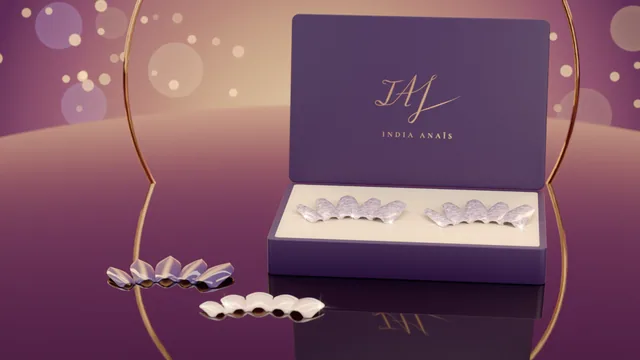
The Glass Top Coat from India Anaïs is a thick, self-levelling quick-dry top coat that sets to a hard shine in minutes; the first edition is sold out, and the next edition is planned for spring 2027. Any quick-dry top coat that sets the same way fits the routine.
How long until nail polish is fully dry?
Touch-dry after 3 to 5 minutes, knock-resistant soon after, fully hard after several hours1. A quick-dry top coat shortens the first stage, not the last. Plan the manicure for a time when the hands can rest, ideally the evening, and treat the film as soft until the next morning.
Sheet marks from sleeping on a manicure that is only surface-dry are the most common overnight damage. Paint at least an hour before bed, or use drying drops and sleep with the hands on top of the duvet.
- Regular polish is touch-dry in 3 to 5 minutes but takes hours to harden through.
- Two thin coats with 1 to 2 minutes between them are the biggest single speed gain.
- A quick-dry top coat sets a hard skin in 1 to 2 minutes and protects against dents.
- Cold water and cool air only stiffen the surface; hot hairdryers and UV lamps do nothing useful.
- Paint in the evening and keep hands out of hot water until the next morning.
Questions people ask
Does cold water dry nail polish?
It sets the surface skin so the nail feels dry sooner, but the solvent underneath has not evaporated. The film still dents for hours and the nails are now wet. Cool moving air does the same job without the water.
Can I use a hairdryer to dry nail polish?
Only on the cool setting, held at arm's length. Hot air softens the film, can raise bubbles and blows dust onto the wet surface. A small fan is the better tool.
Does a UV lamp dry regular nail polish?
No. Regular polish dries by solvent evaporation and contains no photoinitiator, so a UV or LED lamp does nothing to it. Lamps cure gel polish only.
How long should I wait between coats?
One to two minutes for regular polish, with 30 to 60 seconds as the absolute minimum. Coats applied too quickly trap solvent, which slows drying and can cause bubbles.
Why does my nail polish take so long to dry?
Thick coats are the usual reason, followed by a cold or humid room and an old, thickened polish. Paint two thin coats at room temperature and finish with a quick-dry top coat.
Sources
- Hoelang moet nagellak drogen? · Nagelstudios.nl, 2021
- Nagellak snel drogen: tips en tricks · Douglas
- Water-based nail polish innovation · Personal Care Magazine, 2012
- The 8 Best Luxury Nail Polish Brands for Designer Nails · Who What Wear, 2022
- Why does polish chip and how can you stop it? · Manucurist, 2025
- Frequently Asked Nail Care and Product Questions · Essie

